Thursday, February 24, 2011
If I gambled I might try out this theory
First, a quick note about how gambling works. There are basically three types of gamblers: The everyday guys, the big fish and the sophisticated gamblers.
The everyday guy bets his gut and falls prey to all sorts of cognitive biases like confirmation bias. This guy is basically the cash cow that the books make their money on. They don't bet a lot of money, but there are a lot of them. Their bets are no better than guessing, and any time the books get you to that point, they will make their money. The everyday guy will bet on "his team". The bet is usually about a show of loyalty and maybe some sort of misguided belief that they know things that nobody else does, because they read an article that's freely available to the public.
The big fish is more sophisticated, he knows more about which team is likely to cover (or win, depending on the type of bet), but his problem is that he likes huge bets on single outcomes. He does better than guessing, by a little bit. However, he falls prey because if he wins big on one bet he'll just bet more on a subsequent win, until eventually he gets wiped out and has to start from scratch. You can only make money in gambling if you eventually remove money from your "gambling pot" and stop putting it back in the form larger bets. Because everybody loses at some point. For the big fish, it's not so much about making money, it's about the thrill of gambling. Sure, they love to win, but they love the adrenaline rush of the risk more than anything else. And to keep getting that adrenaline rush, you have to keep betting more and more. Also, for some reason they tend to get a bigger rush when they're betting for something instead of against something, so they tend to focus on things they think are undervalued and bet for them. This is a subtle, yet often important point we'll come back to later.
The sophisticated gamblers are those that pick and choose their moments carefully and always spread their risk by betting smaller sums on a LOT of games. They use a lot of statistics and will occasionally bet on games they know nothing about, if the statistics tell them so. These guys can actually make a living betting on sports, as long as there are enough common guys and big fish out there that the books still have to set the lines around them, and not the sophisticated gamblers. The sophisticated gamblers look at gambling as a science and tackle it in a very cold sophisticated way. Many don't even enjoy gambling, in fact they wouldn't be as good at it if they did. For them it's purely a job, they're no different than a market analyst. In fact many of them are former wall street quants.
So to make money gambling, you have to understand a few things:
1) lines aren't set so that the books equal the probability for each team to win. Lines are set to have equal money coming in as much as possible. Because this equals out their risk.
2) You need to find occasions where you think that big fish and regular guys will have some reason to overvalue one side or another and bet against that. You aren't betting against the teams, you're betting against the other gamblers.
3) Regular guys bet with their heart and common information. You can get a good idea of where they will bet based on which team has the larger betting fanbase and by reading popular ESPN articles.
4) Big Fish tend to be a little more sophisticated, mostly betting on things that they think are undervalued. For instance, in baseball they tend to bet on the team with the higher OBP.
5) Sophisticated guys tend to bet against things they think are overvalued.
6) Unless you bet for the joy of it, you want to be the sophisticated guy.
How do you find something that is overvalued? Usually you have to find some statistic that is highly correlated with a team's success, yet also highly unstable, that is not an easily repeatable skill and very much a product of luck.
Some examples:
MLB: batting average with runners in scoring position. For a long time you could make a killing in baseball by getting AGAINST the team with the higher batting average with runners in scoring position. It's been more or less statistically proven that hitting with runners in scoring position isn't really a repeatable skill. Teams almost always regress to what their overall batting average is, plus a couple of points (for reasons too numerous and complicated to go into here, most hitters are going to hit slightly better with runners in scoring position, not because of skill, but because of systematic differences in the situation). Yet hitting with runners in scoring position is highly correlated with success. You can still make SOME money with this approach, but not nearly as much as the good old days when the first thing that made someone like a player or team was clutch hitting.
NFL: Red Zone Offense and Defense. Unlike hitting with runners in scoring position, this is a valuable skill that some teams are going to be systematically better or worse at. However, it's still overvalued. This area is again highly correlated with a team's success, but it's also at least partially, if not primarily based on luck. You're isolating just a few moments in a game and giving them enormous importance in the outcome of the game. Any time this happens, it's often the case that the "skill" becomes overvalued. You can win a lot of games very simply by taking a team's redzone offense and defense rankings, adding them and then betting AGAINST the one with the better composite ranking. Hypothetical Example: Indianapolis v. Jacksonville (Indy 3.5 point favorite) Indianapolis is ranked 12th in red zone offense and 22nd in redzone defense. Jacksonville is ranked 23rd in redzone offense, but 3rd in redzone defense. Indianapolis' composite score is 34 v. Jacksonville's composite score is 25. Bet on Indianapolis. This may seem highly counterintuitive, betting on the statistically worse team, but remember, its not that you are betting on a team, its that you're betting against things that are overvalued. Red Zone offense and defense, being highly important to game outcome, yet largely based on luck, tend to be overvalued.
NBA: 3 point FG % defense. Again, this is a valuable skill, and skill has a lot to do with it, but again, luck has a lot to do with it as well, and it tends to be slightly overvalued when it comes to game outcomes because of how important it is to game outcomes, yet how relatively small the sample size is.
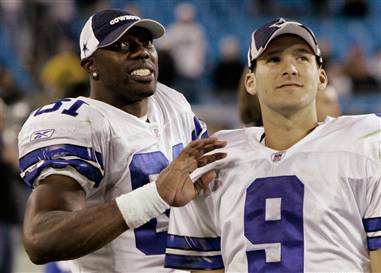
Early in the season, bet against teams with more rabid fanbases. Early in the season the big fish tend to lay low. There isn't yet a lot of information out there on which teams are better, making large single bets especially dangerous. Yet, there is some money to be made if you know how to bet against the regular guys, who are just as likely to bet early in the season as late in the season (excluding playoffs, where everybody bets more). Remember, regular guys bet with their heart, so it's often a good strategy to roughly gauge the rabidity and size of the fanbases and bet against teams whose fanbases vastly outpace their opponents. Early in a season, it's a pretty good idea to bet against the Cowboys in a matchup against the Jaguars. Whtever that line is, you can almost assure it will be slightly too high in favor of the Cowboys to bring in money for the Jaguars, but won't ever quite get "right" because of the Cowboys perpetually large, optimistic and rabid fanbase.
The major key here to being a sophisticated sports gambler is realizing what you're gambling against. You're gambling against the other gamblers. Thus you must focus not on which team you think is better, you must gamble against what you think is overvalued by the other gamblers. Especially the regular guys and the big fish. You also have to realize that this only wins on average, and that your best bet is to find quality strategies and bet small sums on a LOT of games, rather than large sums on a few games. Statistics work best over large samples.
Of course the best strategy is not to gamble and invest your money in bonds and stable stocks with good fundamentals. But I digress.
Wednesday, February 23, 2011
Occam's Razor, as applied to dinosaur extinction
Wikipedia's page on theories of dino extinction is several thousand words long.
or we could consider:
I think Occam's answer is clear.
or we could consider:
I think Occam's answer is clear.
Friday, February 18, 2011
Album Review: Radiohead - The King of Limbs
Radiohead's latest offering is something akin to those days when you have a lot of things you are supposed to do, but you get caught up in a couple of things, do an amazing job on them and then kind of half ass the rest.
King of Limbs is short, 37 minutes total playing time. This is exacerbated by the fact that really this is a 4 song EP, with 4 generic ambient trance* beat tracks they slapped on the beginning to create a full album.
But boy, what a 4 song EP. To be clear, this is a continuation of Radiohead's general trend as these four songs could easily have been fit onto In Rainbows. They would have been amongst the better tracks on that album, which is impressive, since it was a very good album.
Putting 4 complete snorers to open the album would be risky for any band out there besides Radiohead, as I don't even think that Animal Collective would get people to listen to that 5th track if they had put those 4 to start. Yet, with Radiohead it's almost like a sort of joke where Thom is saying "you thought that was going to be what the album was like for a second, didn't you? And you were really worried about how you were going to justify liking this, nah dawg, I'm just playin' here is the real album."
When the actual physical album is released, it's supposed to go on two 10" vinyls, and I'm guessing the songs will be divided up 4 and 4**, which will mean that this really is a 2 EP album, where one EP is terrible and the other is brilliant.
I'd call the last 4 songs a mix of the better parts of Amnesiac and In Rainbows. Give Up The Ghost is ethereal in the best sense. Some breathtakingly beautiful stuff going on here. Because of how short the EP is (yes, I am going to obnoxiously refer to this as an EP), it's not a big deal that the thing is somewhat same-y, as it's hard to get tired of it in 16 minutes. Especially when it's that great.
*Apologies if I used the descriptive terms for that genre incorrectly, its not one that I am familiar with, never having been addicted to ecstasy and all.
** Or, alternatively we may have only heard half the album thus far, as the internet speculation is running. Until we receive something other than these 8 tracks I am going to treat what has been released as the entirety.
1st 4 songs: 58/100
last 4 songs 90/100
Thursday, February 17, 2011
Album Review - Anna Calvi - Anna Calvi
It took me about three weeks, but I really warmed up to this seductive self titled debut.
When I first started to get into the album, one of the first things I did was try to find out who the guitarist was, as the guitar playing was brilliant, perfect for the song, yet distinctive. To my astonishment, Anna Calvi is the guitarist. There is perhaps nothing sexier in the world than a great female guitarist and Anna Calvi backs that up, and then some.
Everything about this album screams sultriness. From her voice, to her John Barry like compositions, to her sultry guitar tone (Fender Telecaster through a Vox AC30) to her lyrics. This album isn't sex. This album is seducing you from across a room, dancing late into the night in a smoky jazz club, bringing you back to her place, making passionate love and then having you walk home at 4 AM confused about what just happened.
The music tends toward a combination of latin/flamenco-ish rhythm, jazzy guitar lines and very Shirley Bassey meets Nina Simone vocals.
84/100
Tuesday, February 15, 2011
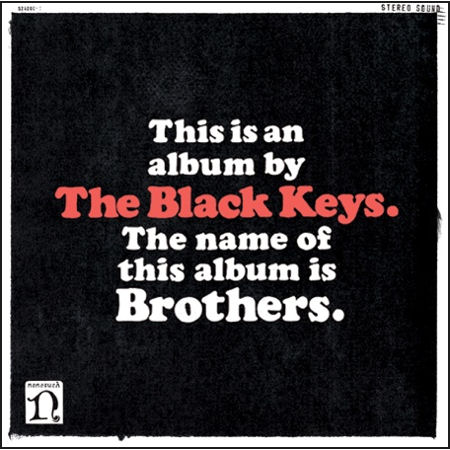
The Black Keys: A brief history and a mini-review of Brothers (why is it so great again?)
I've been following The Black Keys for quite a while now. My uncle, who I grew up with, is pretty tapped into the blues scene, they owned and operated a blues club for several years. They had heard tell of this duo of young guys doing a sort of Junior Kimbrough tribute type thing. Shortly thereafter we actually received an advance copy of The Big Come Up.
In these early years The Black Keys were copying a long tradition in blues music, the guitar/drums duo. This wasn't some new idea, like many seemed to think due to The White Stripes recent popularity. These older blues musicians had been doing this for nearly a century, not to accomplish some sort of "sound" but to split the small pot as few ways as possible. Typically the drummer was paid less than the guitarist/vocalist in such setups as well.
Not only were The Black Keys copying a traditional blues format, but Auerbachs guitar style was a watered down version of Junior Kimbrough (who the band has covered numerous times on several albums and released a tribute album to).
It was very good for a slightly fresh take on a traditional blues duo. However, white kids have been trying to play more or less traditionalist blues for a really long time. They were perhaps noticeable because the blues artists they were copying were relatively obscure blues artists, and most noticeably not Stevie Ray Vaughn, who most of the young white blues guys were (and still are) copying at the time. That being said, they were outright rejected by some of the more knowledgeable indie crowd because they were producing really straightforward blues rock. They were rejected by the blues traditionalist crowd because of their strict adherence to North Mississippi style blues, which wasn't particularly en vogue with the older white guys who controlled the blues traditionalist scene at the time (Chicago blues were and are the dominant style in that scene).
Thickfreakness saw them take large leaps forward as a duo. Patrick Carney became a substantially better drummer, Dan Auerbach became a much better guitarist and singer. Most noticeably their songwriting drastically improved and they stopped leaning on covers as much. They were still producing the same raw blues retrofits, but at a much higher level at this point. Auerbach finally revealed himself as a great crafter of simplistic, yet catchy guitar riffs. And his guitar tone was brutal in a good way. The downside was that The Black Keys didn't have very much sonic diversity up their sleeves and the songs could get "same-y" really quick. Any song off the album could sound great in isolation, but listened to as a whole and you found yourself eventually letting the album become background music, as everything quickly turned quite predictable.
Then they dropped their bombshell. I can still remember the first time I heard Rubber Factory. It was everything The Black Keys had been, but tighter, more catchy and more sonically diversified. Instead of just being neo-blues standard bearers, they were a real Rock and Roll force to be reckoned with. Auerbach had grown to incorporate several different guitar styles and tones throughout the album, and even played fiddle and lap steel at times. Carney had perfected his brutal at times, but often very syncopated drumming style. The biggest leap forward was they had learned to write more than one song. A prior criticism of the band was something along the lines of "that one song they wrote was great, they just rewrote it 13 more times." Here they ventured from the stark, hypnotic When The Lights Go Out to the catchy, funky Girl Is On My Mind, to the sweet Lengths. Instead of being a weak shadow of their influences the band had transcended their influences to be something that while derivative, was great in its own right. The album was generally critically acclaimed, except by Rolling Stone, who gave it a mixed review. The album put the band out there in the indie scene solely by its undeniable brilliance. But it didn't get them all the way out there. A lot of indie hipsters still didn't really like them. They were far too traditionalist and sounded sort of like a lot of the music their parents liked.
The duo then tooled around for a couple of years, releasing a tribute album to Junior Kimbrough called Chulahoma and another album called Magic Potion, which was good, but certainly not of the level of Rubber Factory. The band was treading water at this point and was losing a lot of the momentum that they had built up with their steady ascendancy with their first three albums. Then they got their big break.
If one man could be called The Coolest Person In The World in 2008, it was probably Danger Mouse. He had built incredible amounts of credibility in both the popular music world and the indie rock world. His most revered work was a never released mashup album he compiled of The Beatles' White Album and Jay-Z's Black Album, called (oddly enough) The Grey Album. In fact not that many people have ever heard this album, but the idea sounded like perhaps the coolest thing in the history of the world to many, and the fact that evil record companies had suppressed the album only further built Danger Mouse's legend. So in 2007, when a collaboration with Ike Turner fell through due to Turner's unfortunate death (it's a tragedy that Ike Turner will be forever remembered as just the guy who beat Tina Turner. With all his flaws he was a truly great musician.), Danger Mouse agreed to produce the band's next album. All the stars were lined up for The Black Keys to burst upon the scene and conquer the world.
The unfortunate problem was that the album was not very good. Attack and Release screams of being forced. You might call it the equivalent of a 16th century arranged royal wedding, in theory its a great idea bringing together two giants from different worlds, it makes a lot of people happy, but in actuality the two don't really work together. It received near universal mixed reviews, mostly by publications that desperately wanted it to be a great rock record and save rock and roll music. And it just wasn't. Danger Mouse didn't understand The Black Keys and The Black Keys didn't really get what Danger Mouse was after either. It came off as an aimless record devoid of the brutal, "we're taking over the world" mentality that permeated Rubber Factory so effectively. Most notably Carney's take no prisoners drumming style seemed to be neutered. The album had its moments, but as a whole it fell really flat.
However, what the album did was get their name out there. If indie kids love anything, it's the idea of an unusual collaboration. You'll often read Kanye West reviews by indie blogs where the only thing they ever seem to mention was who he collaborated with or sampled. The sign that they worked with Danger Mouse, and that Danger Mouse was willing to work with them, was an affirmation to many, in and of itself. Even if the resulting album wasn't all that great.
So you now had a band that were indie darlings, yet their current album wasn't really good enough to quite earn them fame yet. A band with a reputation, with a few good/great albums out there, that just needed to give the indie world something to like.
Enter Brothers. A very good album, with great packaging. An album that was introduced right as both the indie world was primed to like the band and popular culture had began to be inundated with 15 second clips of the band's past hits. (this reaffirms two points about The Black Keys, they sound fantastic in 15 second clips and they are sellouts that somehow get a pass for it, not that there's anything wrong with selling your music, but why do they get a pass while Moby was skewered? Also of note was that almost all the songs on those commercials and movie trailers were from Rubber Factory) Somehow the confluence of all these factors led to the album being massively overrated. It was a good album, to be sure, but it wasn't their best album, by a long shot. It certainly wasn't as good as other albums in 2010. Yet many outlets pegged it as their album of the year and it won a Grammy for Alternative Album of the Year.
The album was simply a mixing of the less inspired moments of Thickfreakness and Rubber Factory. I defy anyone to listen to Brothers back to back with Rubber Factory and tell me that Brothers even remotely holds a candle. The album lacks the rawness that the best moments on Rubber Factory had. It lacks the tenderness of The Lengths. Auerbach seems much less inclined to just go for big moments, vocally or with his guitar. His tone seems more subdued, less raw. And the songs aren't as well structured, catchy or compelling. There are certainly moments, again, but none of the highs are as high and the album runs into that "same-y" rut that their first two albums did. But yet it's by far their best selling album and most critically acclaimed.
What we can see here is that the confluence of so many factors: the packaging of the album, the band's exposure on commercials, movies, The Colbert Report, indie blogs, etc and their traditionalist mass appeal combined with their recently found indie cred. These all combined to create an unstoppable tour de force, regardless of whether or not the album is actually great instead of just good.
Rating for Brothers: 79/100
Labels:
Brothers,
Danger Mouse,
Reviews,
The Black Keys
Friday, February 11, 2011
10 Books That Changed The Way I Think About Things
These 10 books aren't necessarily my 10 favorite books of all time, though some of them would be on that list. These are the 10 books that most fundamentally altered the way I think.
10) Tortilla Flat - John Steinbeck
I got this as a 13th birthday present from an aunt. The book was paired up with Of Mice And Men, which is much better known. I can only guess that this was done to make the book thicker, because the publisher did some study on the optimal thickness for book sales, and the relatively short Of Mice and Men couldn't be stretched into that thickness. I found Of Mice and Men to be kind of trite and not all that interesting. Tortilla Flat was another story entirely though. The book has a lot to say about how we fit in our friend groups,our motivations in life and more than anything else it really illustrates the humanity of us all. You come away from the novel caring deeply for relatively unremarkable characters that you wouldn't think twice about in real life. This book probably made me a more compassionate person.
9) The Things They Carried - Tim O'Brien
Read this at 17 and it probably shaped my views on war more than any other book. Namely that it's stupid and usually isn't necessary.
8) The Diamond Age - Neal Stephenson
I read this last year. A lot of different themes are covered here, very little of which actually has to do with science fiction. The book is mostly about relationships in all their myriad forms. The relationships we have with our friends, relatives, those in power, those "below" us, with society and with ourselves.
7) The Chronicles of Narnia - C. S. Lewis
Like a lot of kids I read them when I was 12. I don't think I can really say exactly how they influenced my thinking, just that they have.
6) The Man Who Knew Too Much: Steven Turing and the Invention of the Computer - David Leavitt
I don't think this book is particularly well written, but the story of Turing is enough to drive just about any biography. Alan Turing did more to defeat Hitler and save his country (Britain) than any other single person in the whole world. More than Eisenhower, more than anybody in Band of Brothers. Turing nearly singlehandedly broke the Enigma coding machine that the Germans used to send coded messages. Of course this wasn't going to beat Hitler all by itself, but in so doing, Turing probably saved more lives than can be fathomed. Yet, after the war he was condemned for being unashamedly homosexual. Threatened with chemical castration, he took his own life. He also invented the computer, more or less. How this changed me was to further cement the idea that societally/religiously received ethics are often pure evil. Because one man's happiness disgusted some, he was condemned. The very man that had basically saved the whole country was condemned by that country.
5) The Great Transformation - Karen Armstrong
This book can probably be credited with me not being a militant atheist, while at the same time cementing a lot of disdain I have for the way a lot of religion is practiced and invoked.
4) The Blank Slate - Steven Pinker
Really shaped my thinking on the human mind, and how it works. Which is kind of a big deal.
3) Complexity - Mitchell Waldrop
To me, this book is about what makes things interesting. Things that don't change much are too boring, things that change too rapidly are just static. Things that ride the thin line of complexity is where all the magic happens. Profoundly shaped my views on intelligence, humanity, aesthetics and just about anything else you can think of.
2) Freedom Evolves - Daniel Dennett
This book was almost like a clarification of things I already thought. It really focused what I feel about free will and what we are.
1) The Christian Bible - Various (or God, depending on your views)
Living in a Western culture, even when The Bible isn't directly influencing your thought, you're usually thinking in reaction to it. For any person brought up in a Western Culture, to say that The Bible isn't their single largest influence is probably folly. You cannot help but be influenced by it. Regardless of if you are an Atheist, the most devout of Christians, Jewish or an agnostic.
10) Tortilla Flat - John Steinbeck
I got this as a 13th birthday present from an aunt. The book was paired up with Of Mice And Men, which is much better known. I can only guess that this was done to make the book thicker, because the publisher did some study on the optimal thickness for book sales, and the relatively short Of Mice and Men couldn't be stretched into that thickness. I found Of Mice and Men to be kind of trite and not all that interesting. Tortilla Flat was another story entirely though. The book has a lot to say about how we fit in our friend groups,our motivations in life and more than anything else it really illustrates the humanity of us all. You come away from the novel caring deeply for relatively unremarkable characters that you wouldn't think twice about in real life. This book probably made me a more compassionate person.
9) The Things They Carried - Tim O'Brien
Read this at 17 and it probably shaped my views on war more than any other book. Namely that it's stupid and usually isn't necessary.
8) The Diamond Age - Neal Stephenson
I read this last year. A lot of different themes are covered here, very little of which actually has to do with science fiction. The book is mostly about relationships in all their myriad forms. The relationships we have with our friends, relatives, those in power, those "below" us, with society and with ourselves.
7) The Chronicles of Narnia - C. S. Lewis
Like a lot of kids I read them when I was 12. I don't think I can really say exactly how they influenced my thinking, just that they have.
6) The Man Who Knew Too Much: Steven Turing and the Invention of the Computer - David Leavitt
I don't think this book is particularly well written, but the story of Turing is enough to drive just about any biography. Alan Turing did more to defeat Hitler and save his country (Britain) than any other single person in the whole world. More than Eisenhower, more than anybody in Band of Brothers. Turing nearly singlehandedly broke the Enigma coding machine that the Germans used to send coded messages. Of course this wasn't going to beat Hitler all by itself, but in so doing, Turing probably saved more lives than can be fathomed. Yet, after the war he was condemned for being unashamedly homosexual. Threatened with chemical castration, he took his own life. He also invented the computer, more or less. How this changed me was to further cement the idea that societally/religiously received ethics are often pure evil. Because one man's happiness disgusted some, he was condemned. The very man that had basically saved the whole country was condemned by that country.
5) The Great Transformation - Karen Armstrong
This book can probably be credited with me not being a militant atheist, while at the same time cementing a lot of disdain I have for the way a lot of religion is practiced and invoked.
4) The Blank Slate - Steven Pinker
Really shaped my thinking on the human mind, and how it works. Which is kind of a big deal.
3) Complexity - Mitchell Waldrop
To me, this book is about what makes things interesting. Things that don't change much are too boring, things that change too rapidly are just static. Things that ride the thin line of complexity is where all the magic happens. Profoundly shaped my views on intelligence, humanity, aesthetics and just about anything else you can think of.
2) Freedom Evolves - Daniel Dennett
This book was almost like a clarification of things I already thought. It really focused what I feel about free will and what we are.
1) The Christian Bible - Various (or God, depending on your views)
Living in a Western culture, even when The Bible isn't directly influencing your thought, you're usually thinking in reaction to it. For any person brought up in a Western Culture, to say that The Bible isn't their single largest influence is probably folly. You cannot help but be influenced by it. Regardless of if you are an Atheist, the most devout of Christians, Jewish or an agnostic.
Subscribe to:
Posts (Atom)